
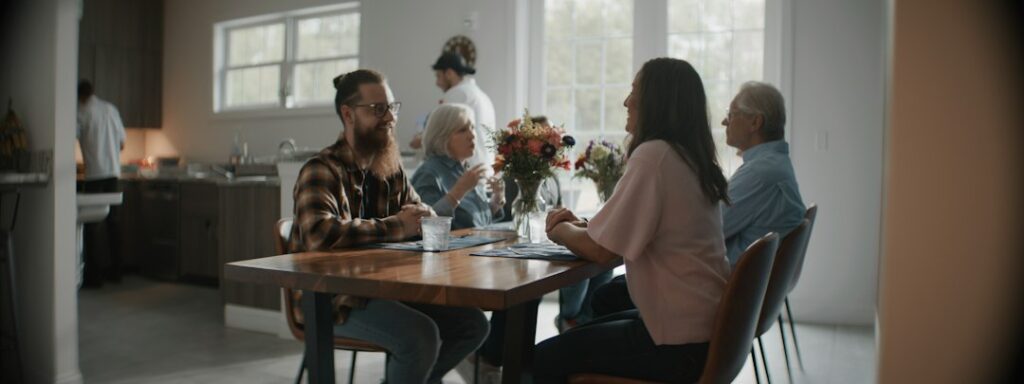
Can couples live together in assisted living?
Yes, many couples can continue living together in an assisted living residence, but the arrangement depends on the residence’s floor plans, licensing requirements, care capabilities, and each person’s needs. Some couples share one living unit, while others choose separate units located near each other.
In Pennsylvania, assisted living residences generally provide each resident with a designated living unit. A couple may be able to share a unit if the residence allows it and the space is appropriate for both people. The unit may include bedroom and living areas, a private bathroom, storage, and limited kitchen capacity.
Couples should ask specifically whether the residence offers:
- Shared units for spouses or partners
- Two nearby units on the same floor
- Flexible arrangements if one person’s care needs change
- Space for personal furniture and familiar belongings
- Accommodation for mobility equipment, such as walkers or wheelchairs
The phrase “couples living together” can mean different things. It may involve sharing a bedroom, sharing an apartment-style unit with separate sleeping areas, or living in neighboring units while maintaining privacy.
How does assisted living support couples with different care needs?
Assisted living can provide individualized support, which is useful when one partner needs more help than the other. A couple may remain part of the same community even if their daily routines are different.
For example, one partner may need help with bathing, dressing, medication reminders, or walking safely. The other may be mostly independent but appreciate meals, housekeeping, transportation coordination, and social activities. Individual assessments help determine which services each person needs.
This approach can reduce the pressure on the healthier partner to provide all of the daily care. It also allows both people to maintain their relationship as spouses or companions rather than shifting entirely into a caregiver-and-patient role.
Care needs may include assistance with:
- Personal hygiene and dressing
- Mobility and transfers
- Medication organization or reminders
- Meals and hydration
- Toileting
- Laundry and housekeeping
- Memory-related supervision
- Safe participation in activities
The exact services vary by residence. Assisted living is not the same as a nursing facility, and a residence may not be able to safely support someone who requires continuous medical monitoring or extensive hands-on care.
What happens if one partner needs memory care or nursing-level services?
A couple may be able to remain in the same overall community even when one partner needs a higher level of support, but this cannot be assumed. Memory care, skilled nursing, or other specialized services may be located in a separate area or may not be offered at all.
Before choosing a residence, ask what happens if either person develops:
- Significant memory loss or wandering behavior
- Frequent falls
- A need for mechanical lifting
- Complex medication or medical needs
- Greater help with eating or toileting
- Behavioral symptoms related to dementia
- A need for rehabilitation after hospitalization
The most useful question is not simply whether the couple can move in together. It is whether the residence can support both people over time and explain what changes would require a transfer.
A written care plan should identify the services each resident needs, how those services will be delivered, and how changes will be reviewed. Couples and families should also ask how often care plans are reassessed.
Does assisted living help couples remain independent?
It can. Assisted living is designed to provide support with daily activities while allowing residents to make choices about routines, clothing, meals, visitors, activities, and personal possessions.
For couples, this may create a balance between shared life and individual independence. One person may attend an exercise class while the other rests. One may join a group meal while the other eats privately. Both can spend time together without one partner having to manage every household task.
This is especially relevant for couples who have lived for many years in an older home. Stairs, narrow hallways, uneven walkways, icy entrances, and home maintenance can become more difficult with age. In Ambridge, winter weather can make outdoor walking and driving more complicated, while older housing may require additional attention to lighting, bathroom access, and fall hazards.
A move does not have to mean giving up familiar routines. Couples may bring photographs, chairs, artwork, books, and other items that make a new living space feel personal.
How should couples compare living arrangements?
The right arrangement depends on comfort, care needs, privacy, finances, and future planning. A shared unit may provide closeness and may be less disruptive emotionally. Separate units may offer better sleep, privacy, or room for different routines.
Couples should consider:
Sleeping patterns
If one person wakes frequently, snores, or needs nighttime assistance, separate sleeping areas may improve rest for both partners.
Mobility and bathroom access
A shared space must allow both people to move safely. Consider walker turning space, bathroom entry, shower access, grab bars, and room for caregivers to assist.

Privacy
Even devoted couples may want private time. Ask whether each person can close and lock a door, receive visitors, make phone calls, and participate in activities separately.
Social preferences
One partner may enjoy frequent group activities while the other prefers quiet time. A supportive setting should allow both choices without separating the couple socially.
Future changes
Ask whether the living arrangement can change if one person needs more care. Moving twice can be stressful, so understanding possible next steps is useful before admission.
What legal and personal rights should couples understand?
Residents maintain important rights in assisted living. These include the right to dignity, privacy, participation in care planning, possession of personal belongings, and freedom from discrimination. Residents may also raise complaints or grievances without intimidation or retaliation.
Each person should have an opportunity to express personal preferences. A spouse or family member may help with planning, but one partner should not automatically make every decision for the other unless legally authorized to do so.
Couples should clarify:
- Who may receive health and care information
- Whether powers of attorney are current
- Who can make financial decisions
- What advance directives say
- How emergencies will be handled
- How disagreements about care will be addressed
It is wise to discuss these matters before a crisis, particularly if one partner has memory impairment or difficulty communicating.
What should families ask before a move?
A tour can answer practical questions that brochures and online descriptions cannot. Couples should observe whether hallways, bathrooms, entrances, and common areas appear manageable for people with different mobility levels.
Useful questions include:
- Can couples share one unit?
- Are units available on the same floor?
- What happens if one person needs more care?
- Are overnight staff available?
- How are falls and emergencies handled?
- Can residents keep familiar furniture?
- Are meals available at flexible times?
- How are transportation needs addressed during bad weather?
- What costs are included, and what services cost extra?
- What circumstances could require a move?
The goal is not to find a setting that promises every possible service. It is to understand what support is available now, what may be available later, and how the residence protects each person’s safety, dignity, and relationship.
