
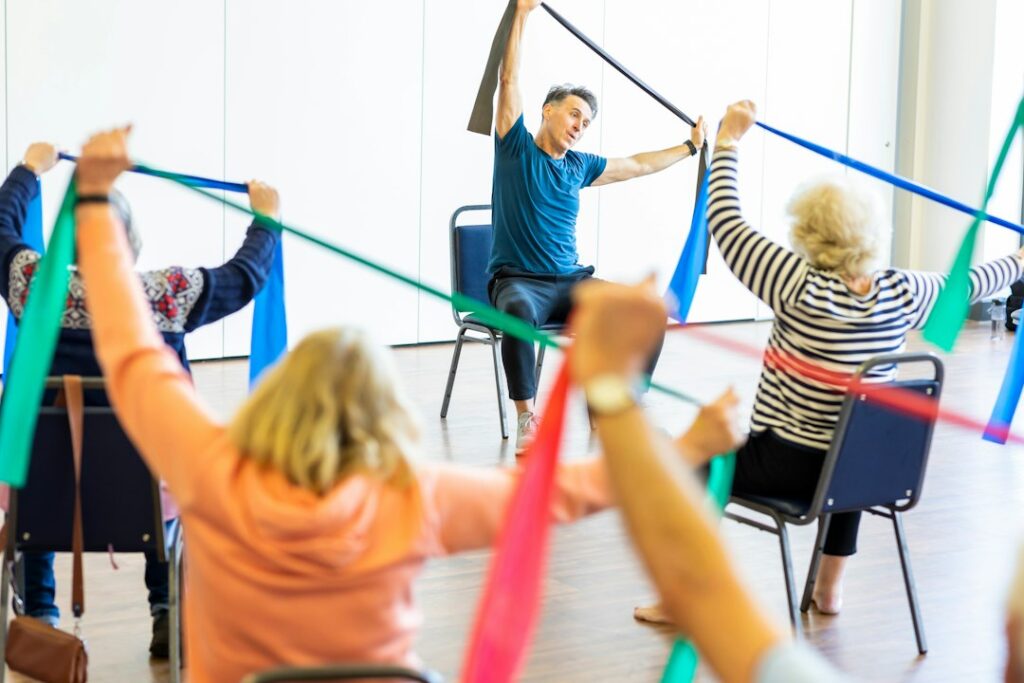
Assisted living can encourage an active lifestyle by making movement, social connection, and meaningful daily activities easier to access. The goal is not to keep every resident on a demanding exercise plan. It is to help people remain as mobile, engaged, and independent as their health allows.
For older adults and families in Ambridge, PA, an active lifestyle may include walking safely, participating in group activities, helping with simple tasks, spending time outdoors, or staying connected with neighbors and relatives. These activities can support physical health as well as mood, confidence, balance, and a sense of purpose.
What does an active lifestyle mean in assisted living?
An active lifestyle in assisted living includes more than formal exercise. It can involve routine movement throughout the day, social participation, hobbies, and activities that encourage residents to make choices and use their abilities.
Examples may include:
- Walking to meals or activities instead of remaining in a room
- Participating in stretching, balance, or chair-based movement
- Gardening, arranging flowers, folding laundry, or helping with light household tasks
- Joining music, art, discussion, or game groups
- Spending time outdoors when weather and mobility conditions allow
- Visiting with family members or taking part in community events
- Practicing daily tasks that support independence
This broader definition matters because residents have different strength levels, medical conditions, interests, and mobility needs. A person who cannot walk long distances may still lead an active day through seated exercise, conversation, creative work, and regular changes in position.
How does assisted living make movement easier?
Assisted living can reduce common barriers that cause older adults to become less active at home. Meals, activities, and shared spaces are often arranged within a manageable distance, and staff may provide reminders or assistance when needed.
A resident may be more likely to walk regularly when there are safe indoor paths, comfortable seating areas, handrails, good lighting, and places to rest. These features can make movement feel less tiring and less risky.
Access to help also matters. Some residents avoid activity because they are concerned about falling, becoming fatigued, or not being able to return safely. Appropriate assistance can provide reassurance while still allowing the resident to do as much as possible independently.
The right level of support should encourage ability rather than replace it. If a resident can safely complete part of a task, preserving that opportunity may help maintain strength, coordination, and confidence.
What kinds of exercise are common?
Activities vary, but assisted living programs often include low-impact options that can be adjusted for different abilities. Common examples include walking groups, seated exercises, gentle stretching, balance practice, and movement to music.
Strength and balance activities are especially useful for daily function. Stronger legs can make it easier to rise from a chair, transfer into a vehicle, or walk to the dining area. Balance practice may support safer movement, although it does not eliminate the risk of falling.
Exercise may take place individually or in a group. Group sessions can provide encouragement and routine, while individual movement may be more appropriate for someone who becomes tired easily or needs special accommodations.
Residents and families should ask whether activities are adapted for people who use walkers, wheelchairs, canes, or other mobility devices. A program should not assume that every participant can stand, walk, or move at the same pace.
Why are social activities part of an active lifestyle?
Social participation is a form of activity because it engages attention, communication, memory, and emotional energy. Regular interaction may also give residents reasons to leave their rooms and follow a daily routine.
Conversation groups, card games, religious or spiritual gatherings, music programs, crafts, and shared meals can help reduce isolation. These activities may be especially valuable for residents who no longer drive or who have fewer opportunities to meet friends and neighbors independently.
Social activities should offer choice rather than pressure. Some residents prefer small gatherings, quiet hobbies, or one-to-one conversation. Others may enjoy larger events. A balanced program makes room for different personalities, cultural traditions, energy levels, and interests.
How do outdoor spaces support activity?
Outdoor access can make movement more enjoyable and provide a change of scenery. Courtyards, walking paths, porches, and garden areas may support short walks, sitting outdoors, light gardening, or visits with family.
Seasonal weather in the Ambridge area can affect outdoor activity. Cold temperatures, rain, snow, heat, and slippery surfaces may require plans to shift indoors. Indoor walking routes, supervised movement, and seated activities can help residents remain active during less predictable weather.
Outdoor areas should be evaluated for practical safety features, including even walking surfaces, adequate lighting, places to sit, shade during warm weather, and clear paths for mobility devices. A pleasant space is helpful, but accessibility and safe maintenance are equally important.

Can assisted living support independence?
Yes. Assisted living is designed to provide support while allowing residents to retain as much independence as possible. An active approach focuses on what a person can still do, not only on the tasks that require assistance.
For example, a resident may need help preparing for the day but still be able to choose clothing, brush their hair, walk part of the way to meals, or participate in setting a table. These small choices and movements can help preserve routine and self-confidence.
Families sometimes assume that more help is always better. Excessive assistance, however, may unintentionally reduce activity if a resident is routinely helped with tasks they could safely complete. Support should be individualized and reviewed as abilities change.
What should families ask about activity programs?
Families can learn a great deal by asking specific questions rather than simply asking whether exercise is offered. Useful questions include:
- Are activities available every day or only on certain days?
- Can exercises be completed from a chair?
- How are activities adapted for residents with memory loss or limited mobility?
- Are walking routes available indoors during poor weather?
- How are falls, fatigue, pain, or shortness of breath handled during activities?
- Can residents choose quieter or less physically demanding options?
- Are families allowed to participate in walks, games, gardening, or outdoor visits?
- How does staff learn about a resident’s interests and previous routines?
The answers can show whether activity is part of daily life or limited to an occasional scheduled class.
How can residents stay active safely?
Safe activity begins with realistic goals and attention to the resident’s health. Movement should generally match the person’s abilities, medical guidance, vision, balance, footwear, and use of mobility equipment.
Residents should report new pain, dizziness, unusual shortness of breath, chest discomfort, or sudden weakness rather than trying to push through those symptoms. A health professional may need to evaluate changes in ability or recommend adjustments.
The most sustainable approach is usually consistent, moderate movement spread throughout the day. A short walk, a few seated exercises, or participation in a social activity may be more practical than an ambitious routine that causes exhaustion.
Assisted living can encourage active living by combining safe surroundings, supportive routines, social opportunities, and respect for individual choice. For many older adults, staying active means having regular reasons to move, connect, contribute, and participate in daily life at a comfortable and appropriate level.
